
Common Problems Access Floor Systems Solve in Commercial Buildings
June 29, 2026
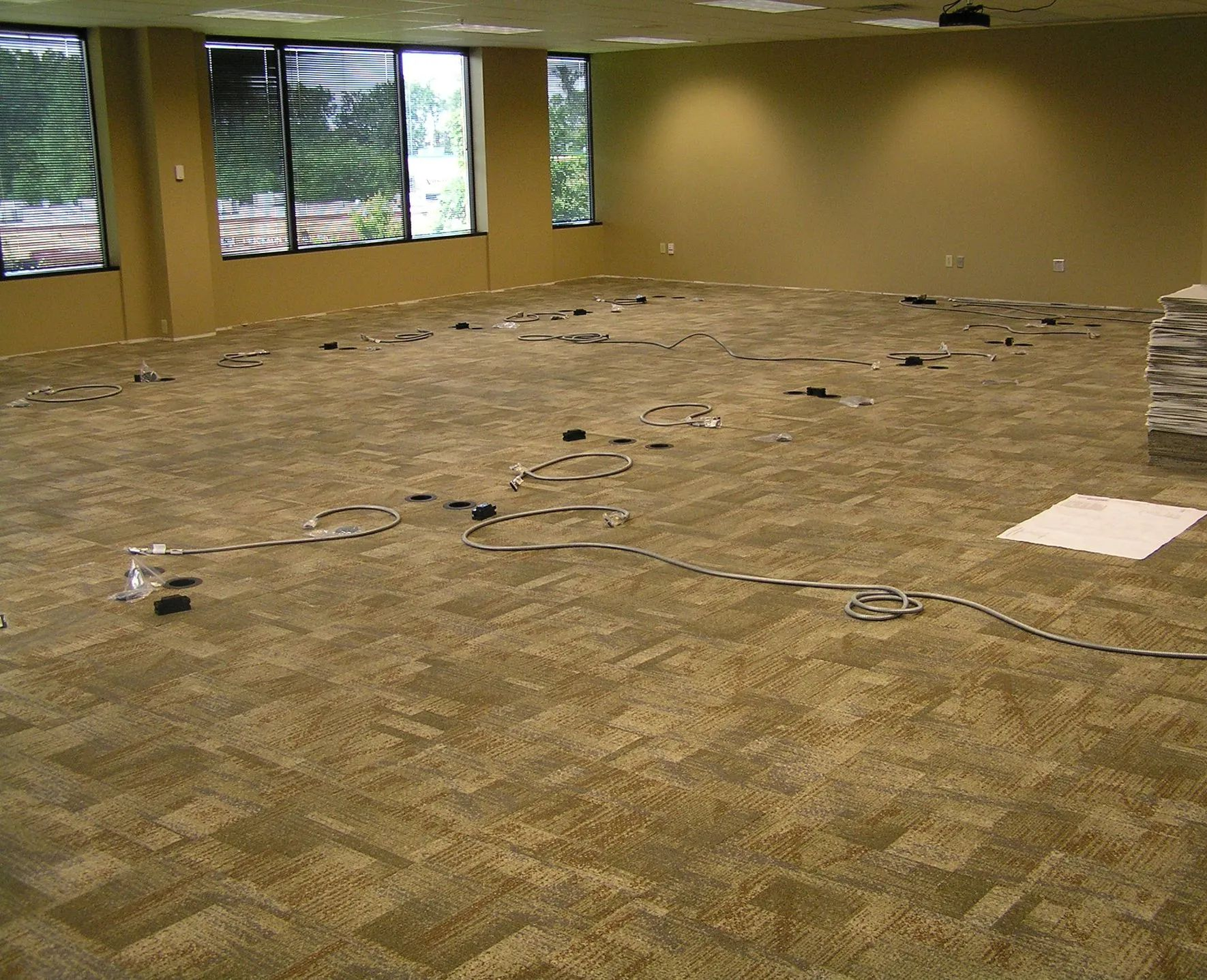
Picture this: your IT team is chasing a cable fault across a sprawling open office floor. Every hour of downtime costs you in productivity and credibility. The maintenance crew pulls up carpet tiles, digs through conduit runs buried in concrete, and still cannot pinpoint the break without disrupting four adjacent workstations. If that sounds like your building, the problem is almost never the cable itself. The real issue is that the infrastructure underneath your floor was designed for a world that no longer exists.
Access floor systems were engineered specifically to prevent that scenario. After working with commercial buildings across the mid-Atlantic region for decades, we have seen the same handful of costly, recurring problems disappear almost entirely once a properly specified raised floor is in place. What follows is a direct look at the most common issues access floors solve and why the architecture of your floor matters more than most building managers realize.
The Infrastructure Access Problem That Derails Operations
The single most disruptive problem in modern commercial buildings is the inability to reach, modify, or expand mechanical and electrical infrastructure without tearing into finished surfaces. In concrete slab construction, every cable run, conduit change, and HVAC modification requires cutting, patching, and repainting. In a busy office building in the D.C. metro corridor, that kind of work cannot happen during business hours, which means weekend shutdowns, contractor overtime, and recurring disruption across the building's lifecycle.
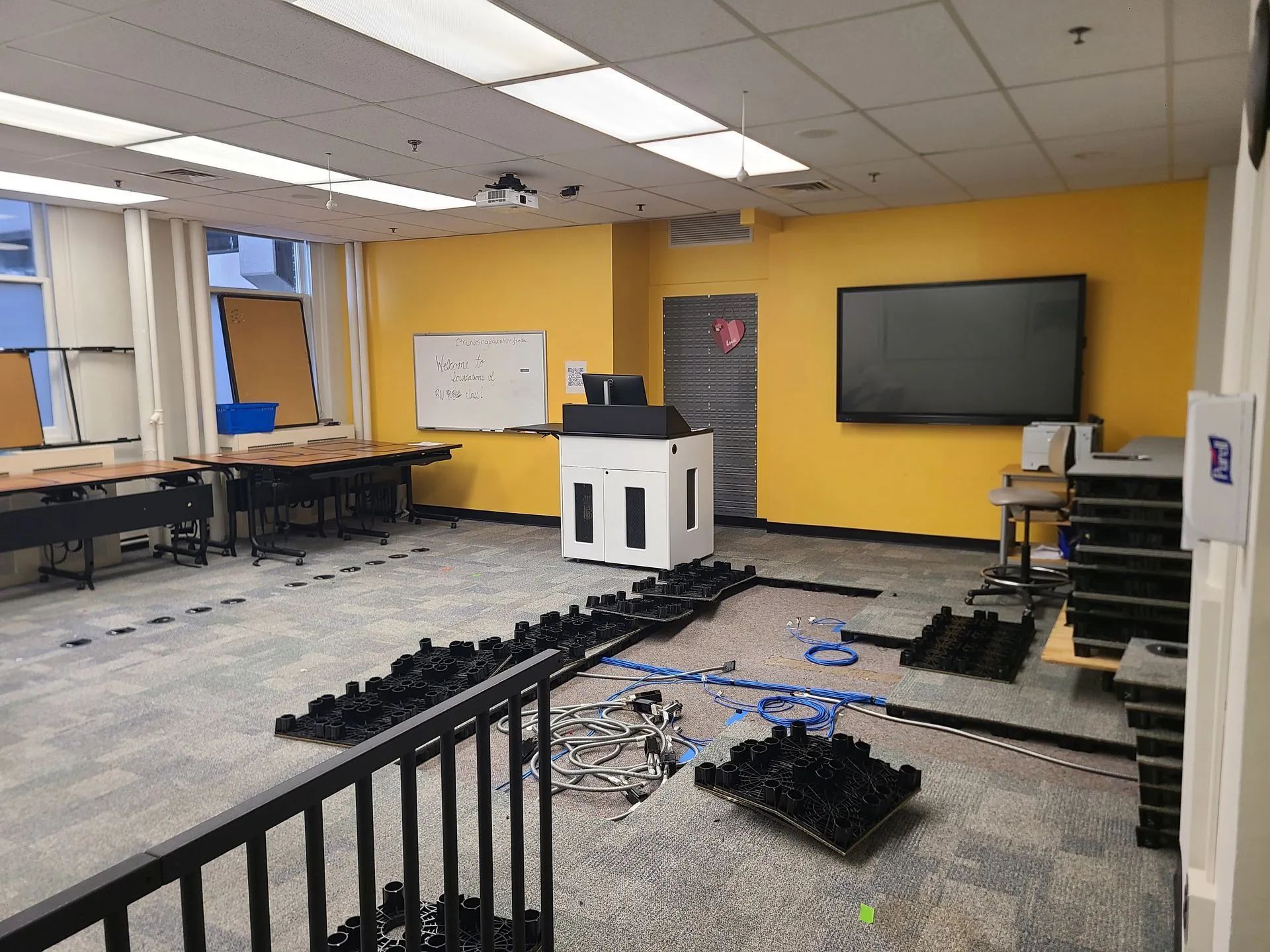
Access floors eliminate this entirely. The entire plenum beneath the panels, typically 6 to 24 inches of clear space depending on system specification, functions as a pressurized or open utility corridor accessible from any point in the floor. A technician can lift a single 24 by 24-inch panel and reach power, data, and HVAC distribution within 90 seconds. No cutting, no patching, no displaced tenants.
In high-churn environments like co-working buildings, call centers, and government facilities throughout Maryland and Northern Virginia, this capability translates directly into lease flexibility. Landlords who can reconfigure a floor in hours rather than weeks command measurably higher retention and faster space absorption.
Inflexible Power and Data Distribution
Fixed floor infrastructure creates a permanent mismatch between where power and data exist and where people actually work. When tenant needs shift, when technology changes, or when headcount grows, a static distribution system forces one of two bad choices: either run unsightly surface raceways and power poles across finished floors, or budget for a full renovation.
A raised floor solves this at the design level. Power whips and data cabling run freely through the plenum and connect to in-floor service outlets positioned on a modular grid. Reconfiguring the grid takes hours. We frequently encounter buildings in Gaithersburg and Rockville where a single floor plate supports three or four different tenant configurations over a 10 to 15 year period, all without a single core drill or trench cut. The access floor absorbs every change without touching the building structure.
For data centers and server rooms, this benefit is amplified further. Hot aisle and cold aisle containment, cable management, and power density upgrades all depend on the ability to route and reroute cabling without downtime. A properly installed raised floor with a minimum plenum depth of 12 inches provides the working clearance needed to handle cable densities that modern server infrastructure demands.
Poor Air Distribution and HVAC Inefficiency
Overhead HVAC systems fight physics. Hot air rises and cold air falls, which means a ceiling-mounted air handler must work against natural convection to cool occupied zones. In open office environments and technology-dense spaces, this results in temperature stratification: occupants at desk level complain of heat while sensors near the ceiling register comfortable readings. Facilities teams respond by lowering thermostat setpoints, which drives energy consumption up 15 to 25 percent above what proper air distribution would require.
Underfloor air distribution through a raised floor plenum reverses this dynamic. Supply air enters the occupied zone at floor level through perforated tiles or adjustable swirl diffusers and rises naturally through the space, carrying heat and contaminants upward toward return air grilles at the ceiling. Occupant comfort improves significantly because conditioned air reaches the breathing zone directly. In commercial buildings we have worked on across the mid-Atlantic region, underfloor air systems routinely reduce HVAC energy draw by 20 to 30 percent compared to equivalent overhead systems.
Maryland's humid summers compound the inefficiency of overhead systems further. Latent heat loads are high from June through September, and a poorly distributed system struggles to maintain dewpoint control at desk level even when dry bulb temperatures read within range. Underfloor distribution handles this more reliably because supply air contacts occupants before it absorbs heat from lighting and equipment.
Cable Management Chaos in Technology-Intensive Spaces
Surface cable management fails predictably over time. Raceways fill, cable tags disappear, and undocumented additions accumulate across years of building occupancy until the floor becomes a fire and maintenance hazard. In data-heavy environments, tangled overhead cable trays create the same problem at ceiling level. Either way, identifying and isolating a single fault in an undocumented cable plant can consume an entire technician day.
A raised floor enforces organization structurally. Cables run point to point through the plenum, supported on cable trays or bundled in organized runs between raised floor pedestals. Every panel is labeled on a floor grid, so any segment of the cable plant is accessible within minutes. We regularly see buildings where a structured plenum cabling standard reduces fault isolation time from 4 to 6 hours down to under 30 minutes.
For buildings pursuing any kind of structured cabling certification or network infrastructure audit, a raised floor with documented plenum routing is the foundation that makes compliance achievable. Government facilities and financial sector tenants in the D.C. metro area increasingly require this as a condition of lease.
Difficult Adaptation in Aging and Adaptive Reuse Buildings
Buildings age and settle. HVAC systems get upgraded. Power requirements change with every technology cycle. Each of these events normally requires invasive structural work when the distribution infrastructure is embedded in the building slab. Access floors decouple the utility distribution layer from the structure entirely, which means the building can accommodate change without touching its structural elements.
In adaptive reuse projects, which are common across older commercial corridors in Montgomery County and the greater Gaithersburg market, raised floor systems allow older buildings to compete with newer construction. A 1980s office building with a raised floor performs like a Class A facility for data and infrastructure purposes regardless of its age. We have completed projects where the raised floor was the single modification that enabled a tenant with enterprise-level IT requirements to occupy space they otherwise would have passed over.
Sound Transmission and Acoustic Separation
Open plan commercial spaces amplify mechanical noise from underfloor equipment and footfall impact across tenant demising lines. A properly specified access floor with acoustic underlay reduces impact sound transmission by 15 to 20 dB compared to hard surface slab construction. In multi-tenant buildings, this reduces complaints and lease disputes significantly.
The plenum itself also functions as an acoustic buffer when properly detailed at partition walls. Sound energy that would otherwise travel through slab penetrations is attenuated by the air gap and the mass of the access floor panels. For law firms, financial tenants, and healthcare office users in the Gaithersburg and Bethesda markets, acoustic separation is a lease requirement, and an access floor contributes meaningfully to meeting it.
Frequently Asked Questions
What types of commercial buildings benefit most from access floor systems?
Data centers, financial trading floors, call centers, government facilities, and high-density office buildings gain the most. Spaces requiring frequent infrastructure changes, high cable density, or precise desk-level climate control will see measurable operational and efficiency benefits from a raised floor.
How does underfloor air distribution compare to overhead HVAC in terms of running expenses?
Underfloor air systems typically cut HVAC energy draw by 20 to 30 percent in comparable commercial spaces because supply air reaches the occupied zone directly without fighting convection. In mid-Atlantic buildings, the efficiency gap widens further during summer cooling season.
Can an access floor be added to an existing building without major structural work?
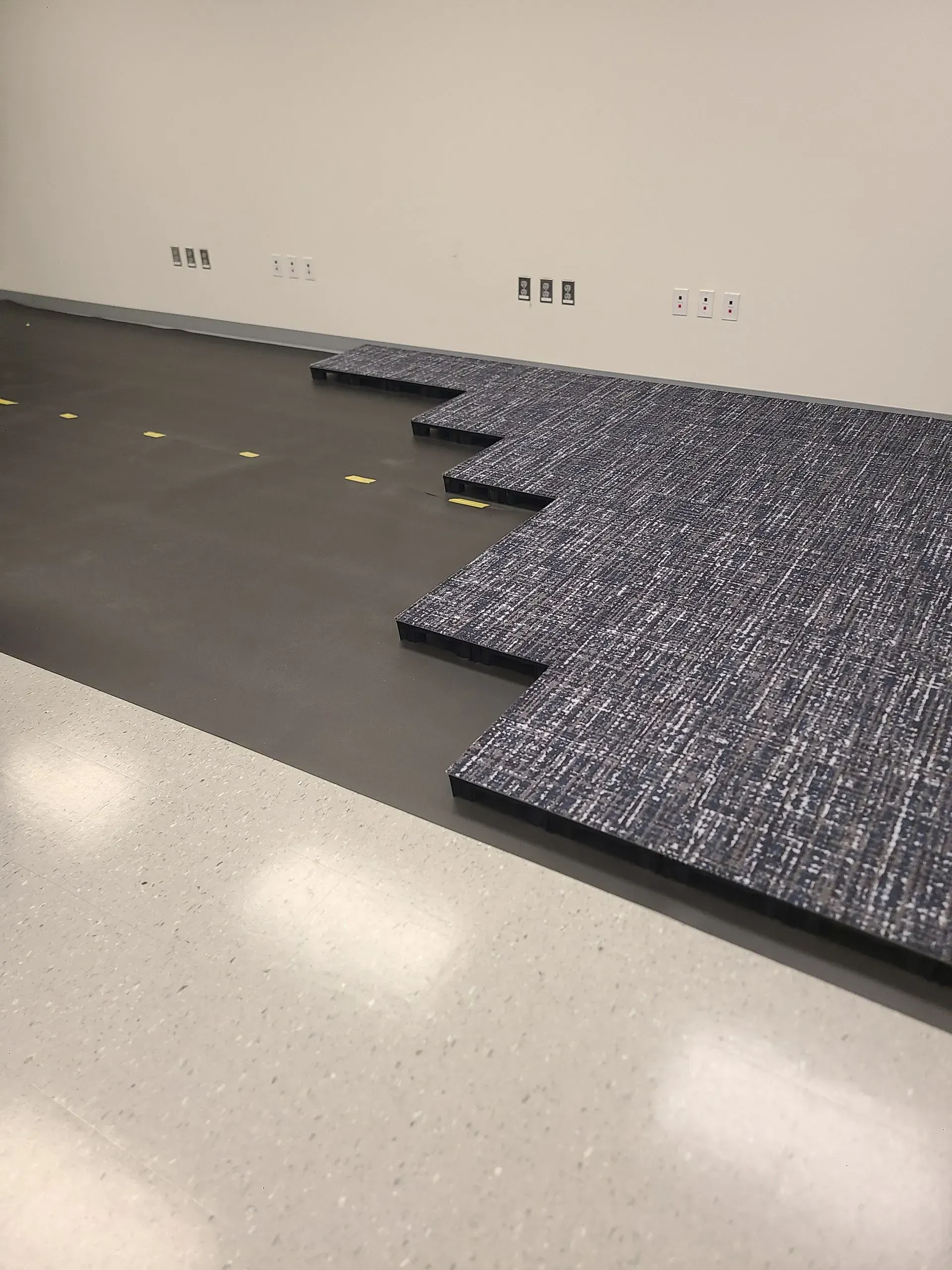
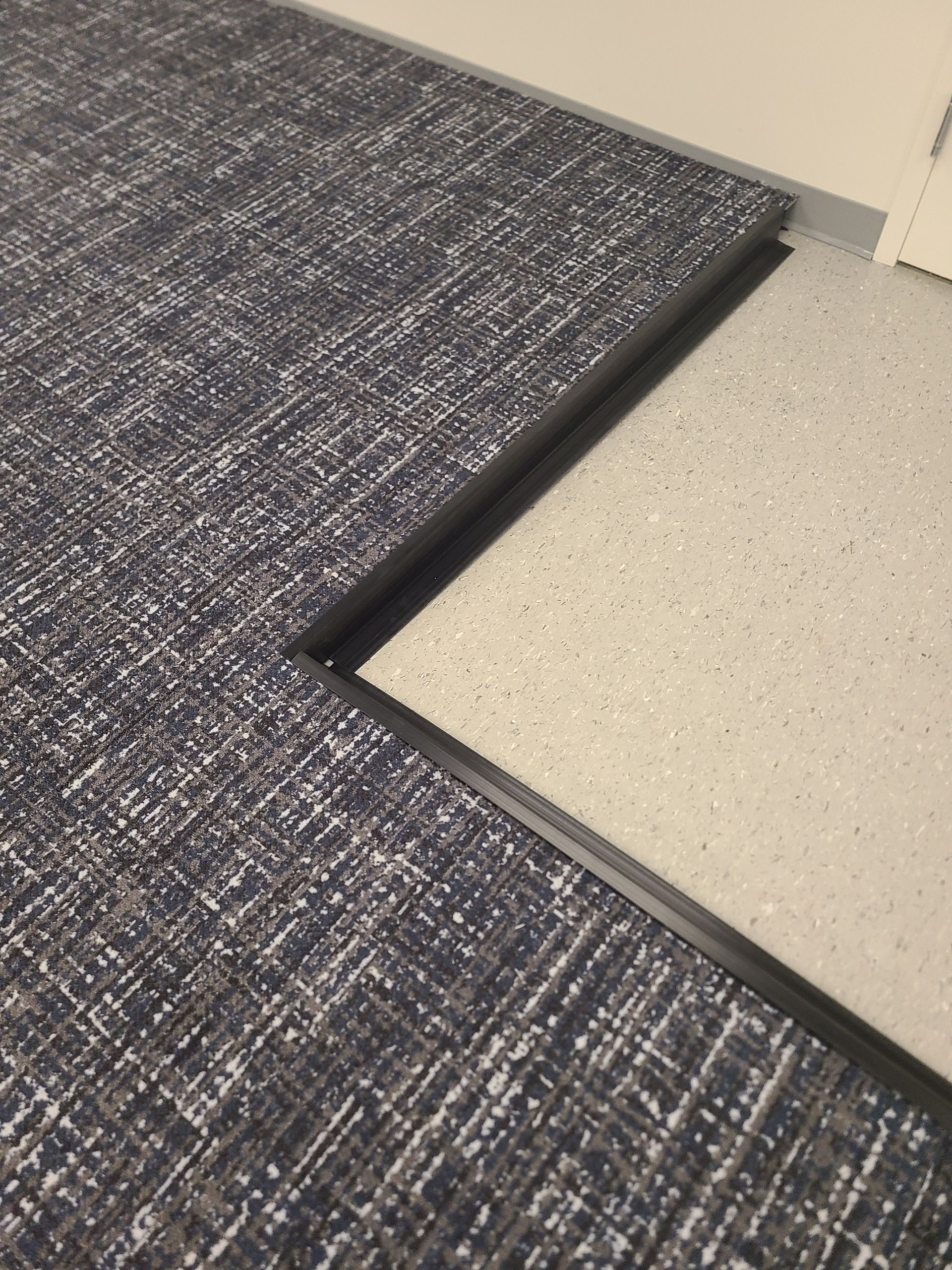
Yes. A raised floor sits atop the existing slab on a pedestal grid, requiring no core drilling or concrete modification. The primary consideration is load capacity: standard commercial floors are typically rated for 1,000 to 2,500 pounds per square foot.
Are access floor systems safe from an electrical standpoint in occupied commercial spaces?
ESD-rated access floor panels dissipate static charge, protecting sensitive electronics and reducing shock risk in technology-dense environments. All plenum electrical work must be performed by licensed electricians. We recommend a plenum inspection any time the underfloor electrical infrastructure is modified.
How long does it take to install an access floor in an occupied commercial building?
A typical installation progresses at 3,000 to 5,000 square feet daily with a full crew. A 20,000 square foot floor plate completes in 4 to 7 working days depending on cut perimeter complexity and pedestal density. Phased installation remains feasible.
Established Access Floor Authority for Commercial Property Owners
The problems covered in this article share a common solution: a properly specified and installed access floor system. In the greater Gaithersburg market, the humidity and technology density of mid-Atlantic commercial buildings make these problems more acute than national averages suggest, and the return on a well-executed raised floor installation is correspondingly higher. Powerflor USA Inc
has delivered
access floor
solutions across commercial, government, and technology facilities for over 25
years. We serve Gaithersburg, Maryland, and the surrounding areas. Contact us to discuss your project requirements and let our field experience work for your building.